

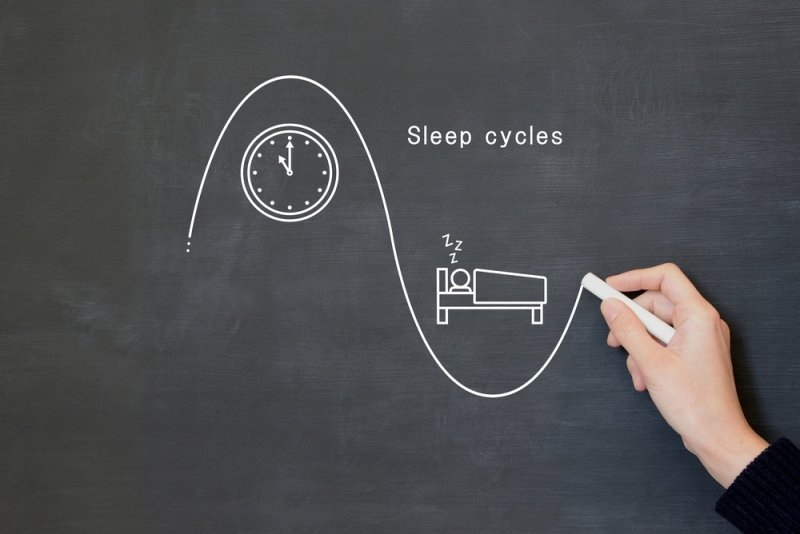
Your circadian clock is working in the background most of your day, from the instant you open your eyes in the morning to when your eyes start to droop later that night.
An aligned body clock can make it easier to sleep and provide more consistent energy levels. When out of sync, it can be useful to know your clock.
Our bodies have a 24-hour timing system known as the circadian rhythm that lets us know when to sleep, wake, release hormones, control our body temperature, metabolise food, and a whole lot of other things. The circadian rhythm lives in the brain.
You can't change your internal clock. But your surroundings can influence it. Like setting an alarm clock, light and darkness can influence your body's internal clock to follow the 24-hour cycle of light and darkness in your environment.
During the early morning, when your brain is fully awake and active, your brain is alert because of exposure to light. During the evening, when it becomes dark, your brain recognises that it is the right time to settle for sleep.
This is the basis of the circadian rhythm sleep-wake cycle. But circadian rhythm is only a part of the sleep regulation mechanism. Your sleep deficit increases the longer you are awake; this activates a homeostatic drive for sleep to maintain the balance between sleep and wakefulness.
A broken internal clock isn't always a matter of insomnia. There are some signs that your body can give you to tell you that your circadian rhythm and the activities you do each day are no longer in sync. Here's what happens when your circadian rhythm is disrupted:
Watch for patterns such as:
These warning signs can occasionally occur without there being a disorder. Yet persistent symptoms can, on occasion, be associated with a circadian rhythm disorder and should be looked into.
Your body clock is a response to regular inputs. Your body clock can be reset, strengthened, and weakened by the habits you perform on a daily basis. By knowing how your circadian rhythm can be disrupted, you will be better equipped to know the habits you should change.
How does light affect circadian rhythm?
Light that reaches your eyes transmits timing signals to your brain that, in turn, help your circadian rhythm sleep-wake cycle stay on course. Exposure to bright light during the day will help keep you alert while darkness tells your body to wind down.
Getting exposed to a bright light source late at night can send a mixed message to your brain when it's time to relax. Being out in natural light during the day and making your environment darker in the evening can serve as stronger messengers to your circadian rhythm.
Having very different sleep and wake times can also make your body clock more difficult to guess. This often happens, for example, if you stay up late at weekends but then attempt to get back to your usual weekday times.
Other factors that may cause circadian rhythm disruption include working the night shift, travelling between different time zones often, irregular sleeping schedules, delayed taking of naps, and irregular timing of eating or physical activity.
Depending on the severity and length of the mismatch, it can affect your body in many ways. You might not be able to sleep when you need to, you can't sleep when you should be sleeping, or it might be difficult to stay awake during the day.
Much like concentration, your mood, appetite, and even your general energy during the course of the day will be negatively affected by a misaligned circadian rhythm. If it continues, it'll be tough to sustain a sleep routine based upon the circadian rhythm without actively intervening.
Seeking answers to 'How to reset circadian rhythm?’ Strengthen the signals that indicate when your day starts and ends. Trying to make several changes at the same time can make it hard to stick to a new routine.
How to fix a disrupted circadian rhythm: Go to bed at the same time each night, and get up in the morning at the same time. Get your days in the sunlight early. Keep regular hours for your meals and activity, drop naps that are too long or too late, and ease into your new bedtime if you want to change when you go to bed.
Make sure the brain knows it's time to sleep by doing it as part of your routine. Have dimmer lighting in the house, don't do very stimulating activities, and make sure you give yourself enough time to relax.
Minimising bright screens near bedtime might be beneficial too. However, you are not trying to perfect your routine but rather have consistent cues that your biological clock can reference each night.
Suggested Reading: How Human Memory Works and Why We Often Forget Information?
Knowing how to get your circadian rhythm back on track isn't quite so simple as just going to bed earlier. If your sleep issues persist even with a fixed schedule, you may need to look into a circadian rhythm disorder or some other sleep disorder.
Consult a health care provider if ongoing sleep issues are affecting your work, school, driving, relationships, or other daily routines. Your provider can help you understand if you may have a circadian rhythm disorder, another sleep disorder, medication, or other underlying problem.
A regular sleep schedule sets your body's internal clock-your circadian rhythm-to signal when it's time to be alert and when it's time to wind down. Your body's clock can be adjusted by light, routines, movement, eating, and other cues.
If you've gotten out of sync, a regular wake-up time, sun during the day, and a routine in the evening can start to regulate your clock.
We all have a natural tendency to prefer our sleep and wake times. Some people feel more alert early in the day, and others tend to have more energy during the afternoon or evening. This is frequently referred to as a chronotype.
Not always. Your circadian rhythm may become adapted to a repetitive routine and stimuli, but it can also adapt with time as the cues change. It is best to be consistent about when you are trying to get to bed or stay up later.
A drop in alertness in the afternoon is expected due to normal circadian timing and sleep pressure. If you experience very high or constant daytime sleepiness, it can be due to a lack of sleep or a sleep problem.
Yes. Sleeping much later on the weekends can cause a conflict between your weekday and weekend schedules. This can make it more challenging to get back into an early weekday schedule.
Yes. A doctor can look at persistent sleep-wake problems and test for a circadian rhythm disorder or other condition that may be the cause. Treatment depends on the cause of the problem and the severity of the disturbance.
This content was created by AI